
$1,000 Standard Tax Deduction Explained for the 2026–27 Tax Return
Originally published:
May 2025
Quick summary
- The proposed $1,000 standard tax deduction allows eligible taxpayers to claim a flat amount for work-related expenses
- It applies to the 2026–27 tax year, not the current or upcoming tax return
- The earliest it would affect is the 2026–27 tax return, lodged from July 2027
- Taxpayers must choose between the standard deduction or claiming actual expenses
- Receipts may still be required, depending on which option is chosen
- Guidance can help ensure the most appropriate option is chosen
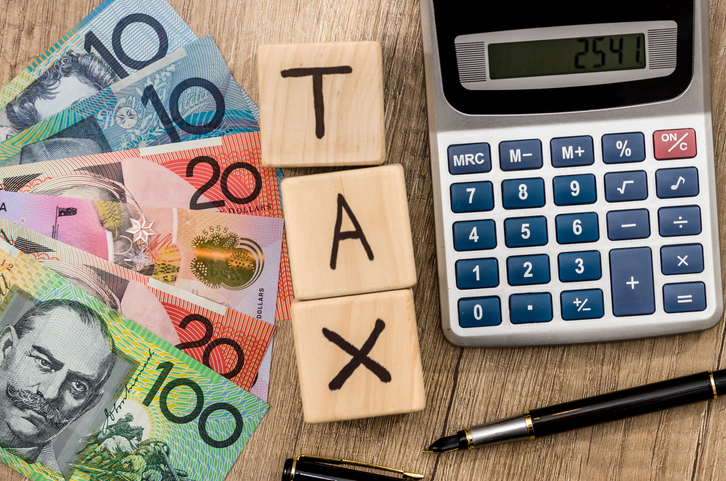
The Australian Government has announced plans to introduce a standard $1,000 tax deduction for work-related expenses, aimed at simplifying how smaller deductions are claimed.
This article focuses on the proposed $1,000 standard deduction and what it may mean for your 2027 tax return, with brief context on other proposed tax changes expected to take effect from the same date.
Importantly, these changes apply to future tax returns, not the current one.
What the $1,000 standard tax deduction is
For the 2026–27 tax year, the Government plans to allow eligible taxpayers to claim a flat $1,000 deduction for work-related expenses, instead of listing and substantiating individual costs.The deduction is expected to benefit around six million Australians who currently claim less than $1,000 in work-related expenses each year.
Under the proposal:
- Taxpayers can choose to claim a standard $1,000 amount
- Individual work-related expenses would not need to be itemised
- In theory, receipts would not be required if the standard deduction is used
The intention is to simplify how some work-related expenses are claimed, while still requiring taxpayers to choose the option that best suits their individual circumstances.
To understand how this change may affect your tax return, it helps to be clear on when it will actually apply.
When the $1,000 standard tax deduction applies
The $1,000 standard tax deduction is expected to apply from 1 July 2026, meaning it relates to the 2026–27 financial year.As a result:
- It does not apply to the 2025 tax return
- It does not apply to the 2026 tax return
- The earliest taxpayers could benefit is when lodging their return from July 2027
Until then, current work-related deduction rules continue to apply, including existing substantiation requirements.
While the timing is straightforward, how the deduction is used is where most of the practical decision-making sits.
Choosing between the standard deduction and actual expenses
When the standard deduction becomes available, taxpayers will still need to decide whether to:
- Claim the standard $1,000 deduction, or
- Claim their actual work-related expenses
If your total work-related expenses are more than $1,000, you will not be eligible for the standard deduction and must claim your actual expenses instead.
Choosing the standard deduction when your actual expenses are higher could mean missing out on deductions you’re entitled to. This is why many people review their situation carefully before lodging their return.
This choice also affects what records you need to keep during the year.
When receipts and records are still required
In practice, many taxpayers may still need to keep receipts and records.That’s because you won’t know whether your total work-related expenses exceed $1,000 until the end of the financial year. Keeping records throughout the year preserves your options and allows for an informed decision at tax time.
Tools like ReceiptHub, H&R Block’s free receipt-tracking app, can help by allowing you to:
- Upload and store receipts
- Track working-from-home hours
- Log vehicle expenses in one place
How a claim is made can also influence how it is treated from an ATO review perspective.
How the ATO is expected to review $1,000 deduction claims
Under current proposals, the Australian Taxation Office is not expected to review taxpayers who claim only the standard $1,000 deduction.This allows the ATO to focus on larger and higher-risk claims, including work-related deductions over $1,000.
However, taxpayers remain responsible for claiming correctly, and higher or incorrect claims may still be reviewed. Where actual expenses are claimed, keeping accurate records remains important.
To put this change in context, it also helps to compare it with the rules that apply today.
How the $1,000 deduction compares to the current $300 rule
Under current tax rules:
- Taxpayers can claim up to $300 in work-related expenses without receipts
- If more than $300 is claimed, the entire amount must be substantiated
- The $300 rule does not apply to certain expenses, including:
- Car expenses
- Meal allowances
- Award transport payments
- Travel allowances
For these expenses, taxpayers must still demonstrate how the expense was incurred and how the deduction was calculated.
It remains to be seen whether the $1,000 standard deduction will apply broadly to all work-related expenses under $1,000, or whether it will operate as an extension of the current $300 rule with similar exclusions. Final details will depend on how the legislation is implemented.
Regardless of which method is used, it’s also important to understand what the $1,000 amount actually represents.
Why the $1,000 deduction is not a $1,000 refund
The $1,000 standard deduction is a tax deduction, not a cash payment.A deduction reduces your taxable income, not your refund dollar-for-dollar.
For example:
- At a 30% marginal tax rate
- A $1,000 deduction reduces tax by $300
Understanding this distinction helps set realistic expectations about the benefit.
While the standard deduction is the most significant change for many taxpayers, it is not the only tax measure proposed to begin from July 2026.
Proposed changes to the lowest income tax rate
Alongside the proposed $1,000 standard deduction, the Government has also announced proposed changes to the lowest income tax rate.From 1 July 2026:
- The lowest tax rate is proposed to reduce from 16% to 15%
- This applies to income between $18,201 and $45,000
- The maximum annual saving would be $268
From 1 July 2027:
- The rate is proposed to reduce again from 15% to 14%
- The maximum annual saving would increase to $536
These changes are proposed to apply automatically through PAYG withholding and are separate from how deductions are claimed.
Tax settings that are not changing
Under current policy settings, there are no proposed changes to:
- Negative gearing rules
- GST
- Other income tax thresholds or rates, beyond the lowest bracket
All proposed measures are expected to take effect from July 2026, subject to legislation.
What this means for your tax return
Taken together, these proposed changes may simplify one part of tax time, but they do not remove:
- The need to choose the most appropriate claiming method
- The risk of missing deductions
- The requirement to lodge an accurate tax return
Understanding how these rules apply to your own circumstances can make a meaningful difference to the outcome.
H&R Block will continue to monitor how these measures are legislated and help Australians understand exactly what they mean for their tax return, now and in the years ahead.

Still have questions?
We have the answers. Let us take care of you and your tax needs.
Share with your friends
Related Articles

The ATO is cracking down on tax returns in 2025. See what’s on the ATO's hitlist, from work-relat...
4 min read

See how Labor and the Coalition’s 2025 tax policies could affect your income, deductions and hous...
4 min read

Discover key tax measures in the 2025 Australian Federal Budget, including tax cuts for individua...
4 min read

H&R Block has been named Australia’s top tax agent in Canstar Blue’s 2024 awards, earning five st...
5 min read
.png?width=55&height=48&ext=.png)

-1.svg)

